Fri 29 Aug 08 | 00:28 GMT
You are here: Home > World > Article

IRAQ WRAPUP 3-Shi'ite gunmen in Baghdad ignore truce

Tue 13 May 2008, 12:32 GMT
[-] Text [+]

* Militiamen fight street battles with U.S. forces

* U.S. military says "not looking for a fight"

* Sadr aide urges patience with truce implementation

(Adds comments from Sadr aide)

By Waleed Ibrahim and Tim Cocks

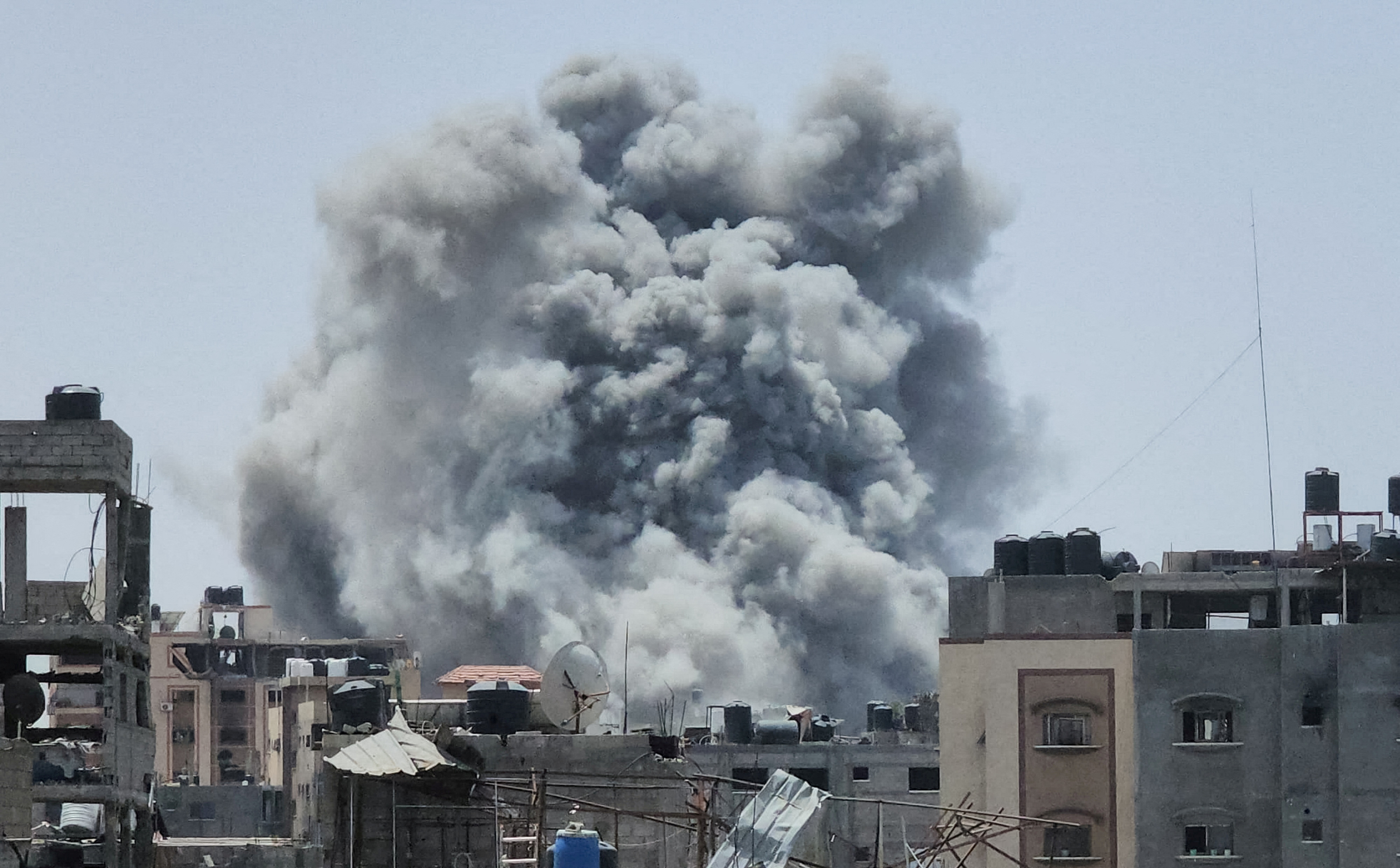
BAGHDAD, May 13 (Reuters) - An agreement aimed at ending fighting in the Baghdad bastion of Iraqi Shi'ite cleric Moqtada al-Sadr appeared on the verge of collapse on Tuesday after gunmen launched a spate of attacks on U.S. troops.

The deal between the ruling Shi'ite alliance and Sadr's opposition movement in parliament to end fighting in the Sadr City slum district was formally signed on Monday.

But with the ink barely dry on the 16-point pact, clashes flared overnight and through Tuesday, raising questions over how much control the anti-American cleric has over some of the Mehdi Army militiamen who profess allegiance to him.

"It is clear that Sadr does not control all of the armed groups that make up the Mehdi Army," Kadhum al-Muqdadi, a professor at Baghdad University, told Reuters. "This fighting could last a long time."

A statement from the Mehdi Army leadership read out in mosques in Sadr City late on Monday said the agreement needed to be respected, residents said.

Nevertheless, the U.S. military said violence broke out between its troops and militants in Sadr City overnight, where seven weeks of clashes have already killed hundreds of people.

A Reuters witness said there had also been intense gun battles between Iraqi security forces and militiamen on Tuesday in Shula, a Sadr stronghold in northwestern Baghdad.

Iraqi police said at least 11 people had been killed and 20 wounded in clashes in Sadr City since Monday night.

They did not give precise details but the U.S. military said it had killed at least three militiamen planting roadside bombs. U.S. troops were attacked numerous times with small arms fire.

A spokesman for the U.S. military in Baghdad, Lieutenant-Colonel Steven Stover, said U.S. forces only targeted militants launching attacks in Monday night's clashes.

"We're not looking for a fight -- we are establishing a safe neighbourhood for Sadr City residents," Stover said. "They (the militants) are obviously not listening to any agreement."

The deal to end the fighting was announced on Saturday and welcomed by Shi'ite Prime Minister Nuri al-Maliki. His crackdown in late March on militias sparked fierce resistance from Shi'ite gunmen, especially the Mehdi Army.

SADRISTS URGE PATIENCE

A senior aide to Sadr urged patience with the truce, saying it might take time to filter down.

"Ceasefires cannot always be implemented immediately. Violations will happen in the first few days. Some armed groups may not be aware of it," Luwaa Sumaisem told reporters in the holy Shi'ite city of Najaf, where Sadr has a major office.

The U.S. blames much of the violence on rogue elements of Sadr's militia it says get weapons, money and training from Shi'ite neighbour Iran, especially modern rockets that have been fired at the Green Zone government compound in Baghdad.

Tehran denies the accusations.

A U.S. military official said a surface-to-air missile was fired from eastern Baghdad at a U.S. aircraft on Saturday evening. The missile exploded harmlessly, the official said.

He did not say what type of aircraft was attacked, but the New York Times reported the missile was fired at a U.S. Apache attack helicopter.

Maliki says operations against militias are intended to impose law and order. Sadrist officials have accused him of trying to sideline the cleric's popular mass movement before provincial elections in October.

The movement, which boycotted the last local elections in 2005, is expected to do well at the expense of other Shi'ite parties supporting Maliki, especially in the Shi'ite south.

Sadr, who is believed to be living in Iran, originally imposed a ceasefire on his Mehdi Army last August as part of attempts to reassert control over his organisation.

While the order held for many months, it has appeared increasingly irrelevant in recent weeks. (Additional reporting by Wisam Mohammed, Aseel Kami and Khalid al-Ansary in Baghdad and Khaled Farhan in Najaf, Editing by Dean Yates and Giles Elgood)

Powered by Reuters AlertNet

AlertNet provides news, images and insight from the world's disasters and conflicts and is brought to you by Reuters Foundation.